Wearable Tech in Education
The Smartglasses Lab explores how wearable and immersive technologies are transforming learning, accessibility, communication, and everyday life. Through interdisciplinary research, we develop practical, human-centred solutions that harness emerging technologies for real-world impact.

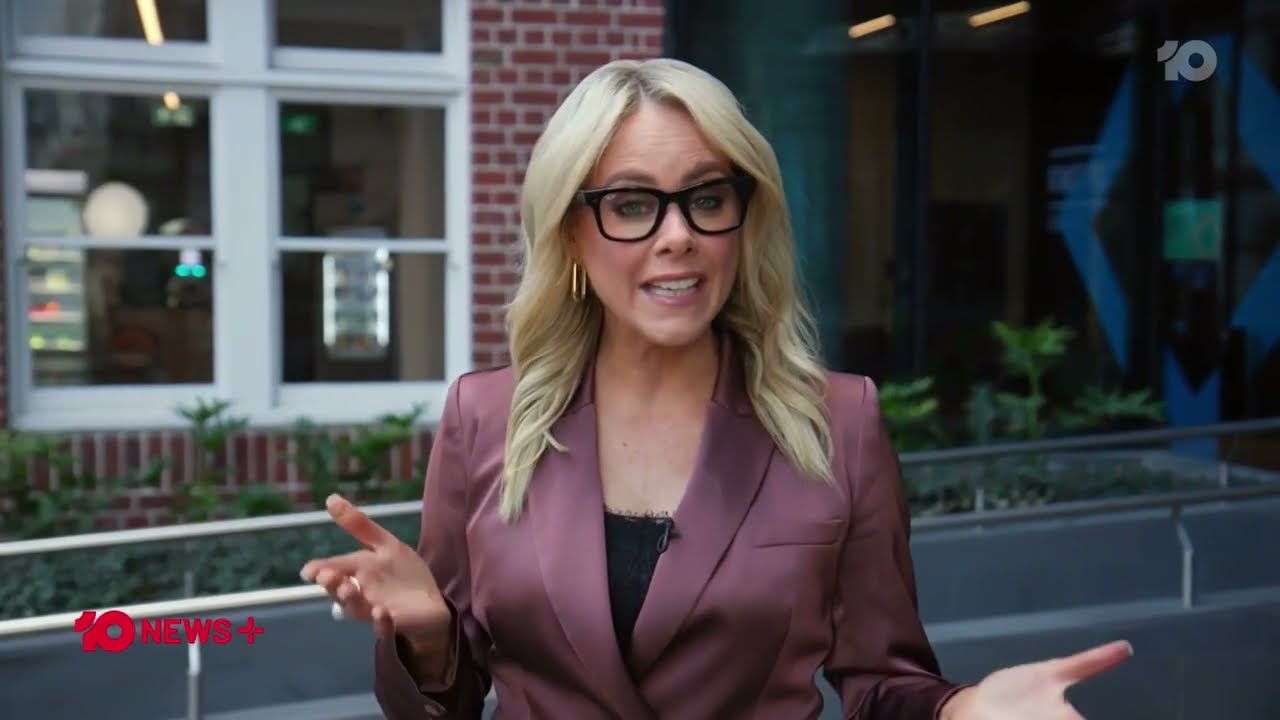
Smart Glasses Lab on 10 News+
We raise awareness of the opportunities, risks, and real-world implications of smart glasses and wearable technologies before the hype becomes everyday reality.
Smart Glasses, Live Streaming,
Doxing, and Deepfakes
Too risky for the road but safe for schools? Rethinking smart glasses in the science classroom
This working paper is presented as a provocation and a framework for universities to anticipate and govern emerging digital harms under the new National Higher Education Code to Prevent and Respond to Gender-Based Violence.
This paper critically examines the governance of smart glasses in K-12 science education, using science classrooms as a case through which policy design challenges become visible. We position these wearable technologies not only as tools of pedagogical innovation but as governance challenges requiring regulatory attention.
Video can’t be displayed
What does good governance of smartglasses in schools look like?
Smart glasses offer exciting potential in K–12 education, but also significant risk. How might features like voice prompts and gesture recognition enhance access and engagement in the classroom? How is policy responding to the critical issues, such as deepfakes, surveillance, and novel forms of cheating?
Through our AIGE in Action initiative, we’re opening up the conversation with the goal of raising awareness about what we need to do to responsibly balance the benefits of smartglasses with the need for good governance.
Two of our researchers, Dr Janine Arantes and Dr Andrew Welsman have critiqued policy blind spots around AI-powered smart glasses in Australian schools. Discussed alongside topics such as governmentality and responsibilisation, they reveal how these devices may enable covert surveillance, shift accountability to educators, and normalize commercial influence in education. They call for awareness campaigns, and urgent policy reform. Paper forthcoming - contact Janine and Andrew for more details:
Does your policy cover smart glasses?
Smart glasses in schools raise urgent ethical, safety, and policy concerns - surveillance risks are real, and responsible regulation must follow swiftly. Read this blog to understand more about smartglasses in schools.
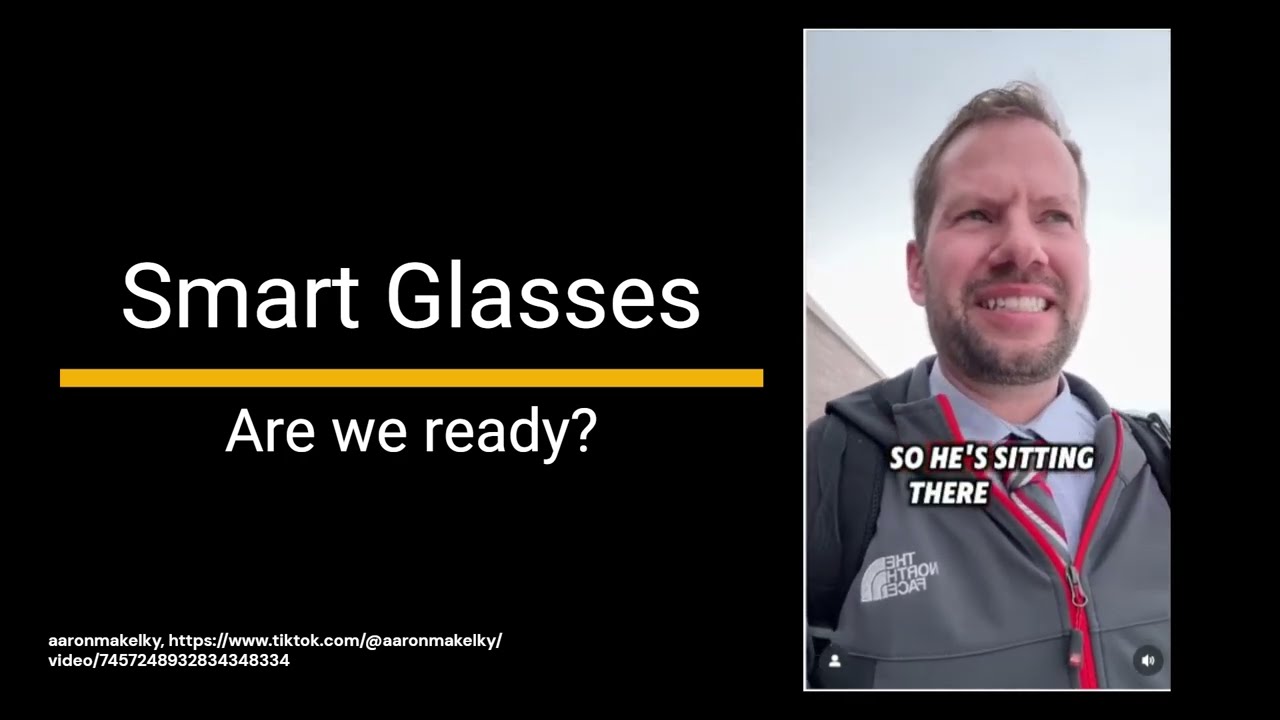
Smart Glasses: Are we ready?
A collection of short videos to prompt thinking about smart glasses in educaiotnal contexts
Video can’t be displayed
Thinking about Smart Glasses
Before smart glasses become invisible in everyday life, we ask what future generations will inherit. Our research examines the ethical, social, and educational choices that will define tomorrow's world.
Scenarios
Scenario: Smart Glasses and Doxing
This scenario is based on NBC News (2024) and Hill (2024, The New York Times) who report on two Harvard students who demonstrated how AI-enhanced smart glasses could identify strangers in public and retrieve personal data within seconds. By combining Ray-Ban Meta glasses, facial search engines like PimEyes, and a ChatGPT-style assistant, the students showed how names, occupations, addresses, and relatives could be extracted at a glance. While the students framed the project as a warning, its implications for women’s safety are profound. Stalking, harassment, and intimate partner violence already disproportionately affect women; wearable recognition devices collapse the remaining boundaries between private life and public exposure. The ease with which identity can be revealed raises psychosocial and physical risks, from doxxing and reputational harm to real-time targeting in unsafe spaces.
Scenario: Covert Recording
Scenario: Governing Smart Glasses a
A female pre-service teacher (PST) on a secondary placement is recorded without consent by a peer wearing smart glasses while team teaching. A short, decontextualised clip is edited with captions that provide audio with what seems to be her voice, but it is not - and contains sexualised undertones of her in a classroom. They thought it was a joke, and posted it to LinkedIn. Recent peer-reviewed work with 1,037 Australian adults shows smart-glasses owners express lower privacy concern than non-owners, with owners reporting greater social acceptability of practices that others may perceive as invasive (Kaviani, Lyall, & Koppel, 2024), and a policy analysis warn that camera-equipped glasses create a surveillance surface in schools that existing device bans rarely anticipate (Arantes & Welsman, 2025). The risks are real for female PSTs on placement. Arguably, gendered abuse is a key vector: UNESCO’s 2023 global report documents how generative AI and platform dynamics intensify technology-facilitated gender-based violence, including reputational attacks on women in public-facing roles (UNESCO, 2023), with 58% of young women and girls globally having experienced online harassment on social media platforms.
This scenario is informed by transfeminist approaches to AI governance (Attard-Frost, 2025), which stress plurality, accountability, and the centring of marginalised voices in the design of technology policies. Rather than framing smart glasses solely as a risk, it helps us to ask how universities might seize the current moment to implement anticipatory, inclusive governance structures before wearable AI becomes entrenched.
Technology, Entitlement and Equity
This scenario explores a disturbing case at the University of Green, where a man wearing smart glasses secretly recorded women on campus and uploaded the videos to social media. While these glasses represent a new frontier in wearable technology, offering real-time translation, navigation, and accessibility features for users with vision impairments, they also highlight how innovation can amplify existing social harms. The same device that empowers some can be weaponised against others. This duality, between accessibility and abuse, frames the central dilemma: how can educational institutions design policies that protect those who rely on assistive technologies while also protecting privacy and safety? The scenario challenges educators, policymakers, and technologists to interrogate where entitlement intersects with engineering and where accountability should be coded into design. It invites reflection on how technology mediates gendered power, how we normalise surveillance through “content culture,” and what it means to balance inclusion with consent in the age of smart wearables.
Smart glasses and Academic Freedom
Deepfakes
This scenario is based on Arantes, Welsman & Marland (2025), “Smart glasses’ boost to inclusivity could cost us our academic freedom”. The article highlights the tension between the accessibility potential of smart glasses and the profound governance risks they introduce.
Smart glasses promise frictionless participation in higher education: students can instantly translate texts, transcribe speech, or reorganise content for their needs. This is life-changing for students with disabilities, dyslexia, or neurodiverse learning styles. However, indistinguishable from ordinary eyewear, these devices open new vectors for cheating, surveillance, and manipulation. As the article warns, smart glasses could normalise hyper-monitoring in classrooms, capturing eye movement, attention levels, and emotional cues. They also generate data that can be weaponised into deepfakes or used for doxing. Such risks threaten the very conditions of academic freedom, as staff and students self-censor for fear of hidden recording. While policies such as GDPR and the AI Act address privacy in broad terms, they fall short in tackling academic freedom and the psychosocial effects of surveillance. The absence of anticipatory governance risks embedding distrust, silence, and reputational harms into everyday teaching.
This case explores a hypothetical scenario in which a teacher is secretly filmed in class, the footage manipulated into a deepfake, and the video circulated online in real time. Within hours, it goes viral—provoking abusive commentary, threats, and severe emotional harm. The teacher is doxxed and placed on stress leave, while colleagues experience secondary trauma. With no clear pathway for institutional redress, the incident highlights Platform-Enabled Teacher-Targeted Adult Cyber Abuse (PETTACA). Drawing on the Online Safety Act 2021 and guidance from the Australian eSafety Commissioner, this case reframes viral abuse as a psychosocial and structural risk, algorithmically amplified by platform design. It advocates for trauma-informed research methodologies that account for both direct and vicarious harm.